
Anjuli Hurt
Bloomsburg, Pennsylvania
Studio
Expressions by Anjuli
Email
Website
Instagram
Facebook
Artist Statement
Clay has been a part of my life for over 20 years, and teaching ceramics has been a passion of mine for more than a decade. I love the balance between creativity and craftsmanship that pottery offers, along with the endless opportunities to learn, experiment, and grow.
My work includes both functional and decorative ceramics created through wheel throwing, handbuilding, slip casting, carving, and surface design. I am drawn to texture, color, and the small details that make each handmade piece unique. Some pieces are playful and whimsical, while others are inspired by nature, mindfulness, and the beauty found in everyday moments.
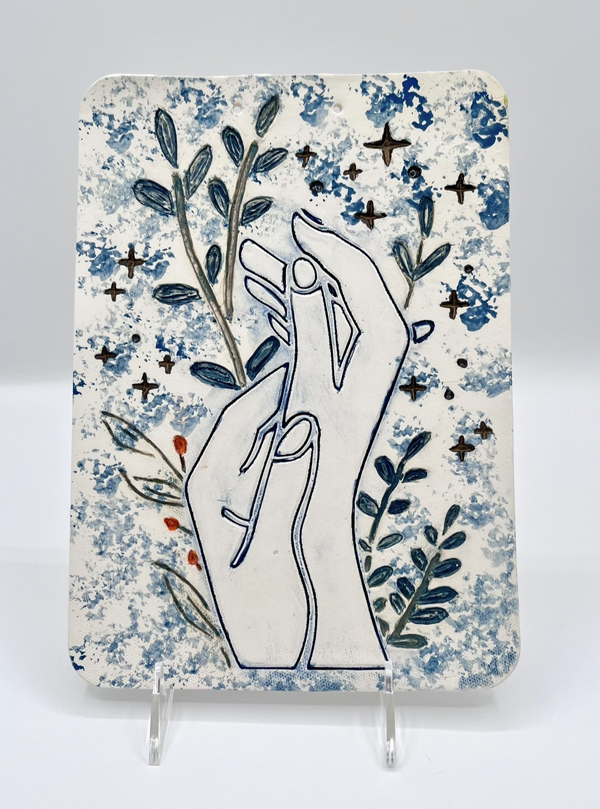
As an artist and instructor, I believe creativity is for everyone. Art doesn’t need to be perfect to be meaningful. Whether I’m creating a carved platter that takes dozens of hours to complete or helping a student make their first piece of pottery, my goal is to encourage curiosity, self-expression, and a sense of accomplishment.
Through my work, I hope to bring a little beauty, joy, and creativity into everyday life while celebrating the unique character of handmade art.
Studio Description
My studio is a small home ceramics studio where creativity, experimentation, and teaching come together. It serves as both a workspace for creating pottery and a classroom where I share my love of clay with students of all skill levels.
The studio is filled with works in progress, shelves of handmade pottery, tools collected over years of making, and an ever-growing collection of glazes waiting to be tested. It is a space where functional pottery, carved surfaces, slip-cast forms, and new ideas develop side by side.
Working from a home studio allows me the freedom to explore a wide range of techniques while maintaining a personal connection to both my artwork and my students. Whether I am throwing on the wheel, handbuilding, carving intricate designs, or experimenting with new surface treatments, the studio is where curiosity and creativity guide the process.
More than just a workspace, my studio is a place of learning, mindfulness, and artistic growth, where every piece reflects the handmade nature of the ceramic process and the joy of creating something from clay.
What type of clay do you use?
I primarily work with B-Mix cone 5/6 clay, which is my favorite because of its smooth texture, versatility, and ability to showcase both form and surface decoration. I also occasionally use cone 5/6 stoneware and porcelain, depending on the project and desired finished look. While I enjoy experimenting with different clay bodies, I find myself returning to B-Mix most often because it works well for both handbuilding and wheel throwing.
What temperature do you fire to?
I typically bisque fire to cone 05 or 06 and glaze fire to cone 5, 5.5, or 6, depending on the clay body and glaze combination I’m using. Most of my work is created within the mid-fire range, which offers a great balance of durability, color development, and glaze variety.
What is your primary forming method?
My work is created using a combination of handbuilding and wheel throwing, with roughly 60% of my pieces being handbuilt and 40% wheel thrown. I enjoy the flexibility this balance provides, allowing me to choose the technique that best suits each idea and design. Working in both methods keeps the creative process fresh and gives me the freedom to explore a wide variety of forms and styles.
What is your favorite surface treatment?
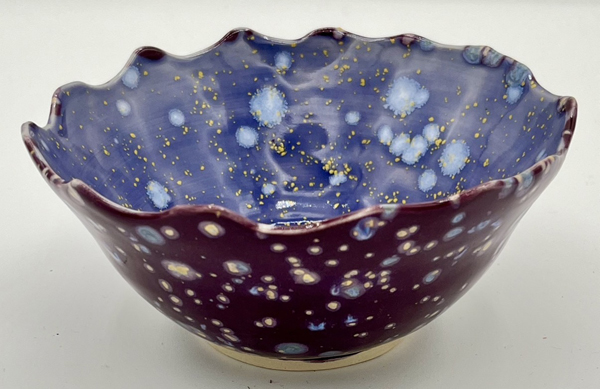
I love using bubble techniques with glazes. Blowing bubbles onto a piece creates unexpected patterns and textures, and you never quite know what you’re going to get. The unpredictability is part of the fun, and every firing feels like opening a surprise package from the kiln.
Do you make any of your own tools?
Yes! While I use many traditional pottery tools, I also enjoy finding creative uses for everyday objects and occasionally making or modifying tools to suit my needs. Over the years, I’ve discovered that some of the best pottery tools aren’t actually sold as pottery tools at all. Experimenting with different tools and techniques is part of the fun and often leads to unique textures, patterns, and creative possibilities in my work
What one word would you use to describe your work?
Expressive
What is your favorite thing about your studio?
It’s a place I can escape to. When life becomes overwhelming, I can spend an hour, or three, in the studio and simply focus on creating. Working with clay helps me slow down, unwind, and be present in the moment. It’s more than just a workspace. It’s a creative refuge where I can recharge, experiment, and reconnect with myself through the process of making.
What is the one thing in your studio you can’t live without?
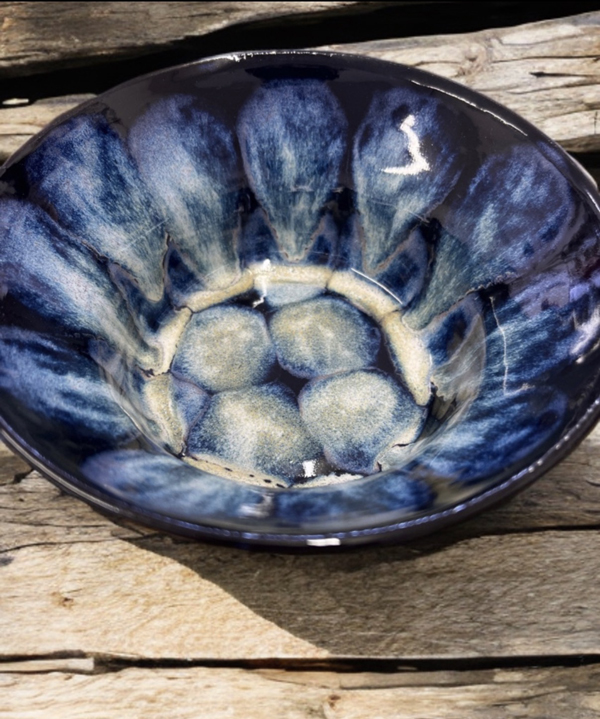
Glazes. While I love the process of forming a piece, opening the kiln and seeing how the glazes turned out is still my favorite part. Glazes can completely transform a piece of pottery, and I enjoy experimenting with different combinations, layers, and effects. There is always an element of surprise, which keeps the process exciting and inspires me to keep exploring new possibilities.
What are your top three studio wishes?
1. Advancer kiln shelves. They’re lighter, more durable, and would make loading and unloading the kiln much easier.
2. More storage space. Like most artists, I always seem to need more room for clay, tools, glazes, and works in progress.
3. More students. One of my favorite parts of ceramics is teaching, and I’d love to share the joy of working with clay with even more people.
There always seems to be one more glaze to buy, one more tool to store, and one more student to inspire.
What’s on your current reading list?
My reading list is usually a mix of ceramics and fiction. I regularly read Ceramics Monthly and Pottery Making Illustrated for inspiration, techniques, and industry trends. When I’m looking to relax, I enjoy escaping into a good novel. Right now, I’m reading The Dungeon Anarchist’s Cookbook, the fourth book in the Dungeon Crawler Carl series. My reading interests are as varied as my pottery, and I’m always happy to discover something new.
How do you save money on materials and supplies?
I buy clay in bulk, pass my leftover clay on to a friend who reclaims it, and occasionally rent out space in my kiln to help offset firing costs. I’m always looking for practical ways to reduce waste and make the most of the materials and equipment I already have.
How do you recharge creatively?
I recharge creatively by immersing myself in inspiration and learning. I enjoy listening to guided meditations and visualizations focused on creativity, watching other artists work, reading pottery magazines and books, and exploring videos online to discover new techniques and ideas.
Sometimes, though, the best thing I can do is step away from pottery for a while. During those times, I might spend time watercoloring, coloring, or exploring another creative hobby. Giving myself permission to work in a different medium helps me recharge and often sparks new ideas.
When I return to clay, my creative juices have had time to stew, and I’m ready to approach my work with fresh eyes and renewed energy.
Do you have any DIY tips for studio efficiency?
Don’t be afraid to look beyond the pottery aisle for tools and supplies. Some of my favorite studio tools started out as everyday household or kitchen items. I also try to organize my studio so that the tools and materials I use most often are within easy reach. A little time spent organizing can save a lot of time and frustration later. For me, studio efficiency isn’t about having the fanciest equipment. It’s about creating a workspace that helps me spend more time making and less time searching for what I need.
What challenges have you given yourself to overcome?
One of the biggest challenges I’ve given myself is continuing to learn and grow rather than staying comfortable with what I already know. I enjoy pushing myself to try new techniques, tackle more detailed and time-consuming projects, and explore forms and surface treatments that are outside my comfort zone.
I’ve also learned how to adapt my creative process around life’s challenges. Some days require patience, flexibility, and a willingness to work differently than I originally planned. Those experiences have taught me that creativity isn’t just about making art. It’s also about problem-solving, perseverance, and finding new ways to bring an idea to life.
Whether it’s learning a new technique, taking on an ambitious carving project, or finding a different path when obstacles arise, I try to view each challenge as an opportunity to grow as both an artist and a person.
What did your first piece look like?
My first major artistic challenge was a deformed duck I made in fourth grade. It didn’t exactly match my vision, but it taught me an important lesson: keep creating. Every artist has pieces that don’t turn out as planned, and those “failures” often teach us as much as our successes. Looking back, that duck may not have been beautiful, but it was the start of a lifelong creative journey.
What ceramic superpower would you have and why?
My ceramic superpower would be the ability to pause time in the studio. There are never enough hours for all the ideas I want to try. I’d spend those extra hours experimenting with glazes, carving, teaching, and creating without having to worry about the clock.
What area of skill do you most look to other artists to learn?
Surface decoration and glazing techniques are always high on my list, but I’m also fascinated by artists who create videos about their work. Making pottery can be challenging, but I’ve discovered that making a good video can be just as difficult. The subject matter may be easy, but turning it into a video that looks effortless takes a great deal of skill. I enjoy watching how other artists film their process, tell a story, edit their footage, and create engaging content. It’s an art form all its own, and it’s an area where I’m always looking to learn and improve.
Who is your ceramic art mentor and why?
My ceramic art mentor is Tim See. I admire him because he is always willing to share what he knows. In a field where people can sometimes guard their techniques, he freely gives his knowledge to help others succeed. His generosity, both as an artist and educator, has inspired me to keep learning and to share what I’ve learned with my own students
What is on your studio playlist?
My studio playlist is very eclectic. On any given day, it might jump from Gregorian chants to Eminem, then over to the soundtrack from The Lord of the Rings, and finish with some 80s hip-hop. My music choices tend to reflect whatever mood I’m in or what I’m working on at the moment.
I enjoy having a wide variety of music playing in the studio because different projects seem to call for different soundtracks. The one constant is that music helps keep the creative energy flowing and makes long hours in the studio even more enjoyable.
Why do you create art?
I create art because it brings me joy. It gives me a place to explore my creativity, challenge myself, and be fully present in the moment. Whether I’m working with clay, watercolor, or another medium, creating helps me slow down, recharge, and express ideas that are difficult to put into words. Art has been a constant in my life for many years, and I can’t imagine a world without it.
Who is your favorite artist and what do you admire about that artist?
My favorite artist is Vincent van Gogh. I’ve always been drawn to the movement and emotion in his work, especially The Starry Night. I admire that despite struggling with what historians believe were significant mental health challenges, he continued to create art that was deeply personal, expressive, and influential. His story reminds me that creativity can persist even during difficult times and that art can be a powerful way to communicate emotions and experiences. His work continues to inspire people around the world more than a century later.
What is your best studio tip?
Stay curious and don’t be afraid to make mistakes. Every “failed” piece teaches you something, and sometimes the best discoveries happen when things don’t go according to plan. Keep experimenting, keep learning, and most importantly, keep creating.
If you could change one property of clay, what would it be?
I’d make clay stop shrinking. Every potter knows the struggle of measuring something perfectly, only to have it come out smaller after firing. It would save a lot of math, guesswork, and occasional surprises!
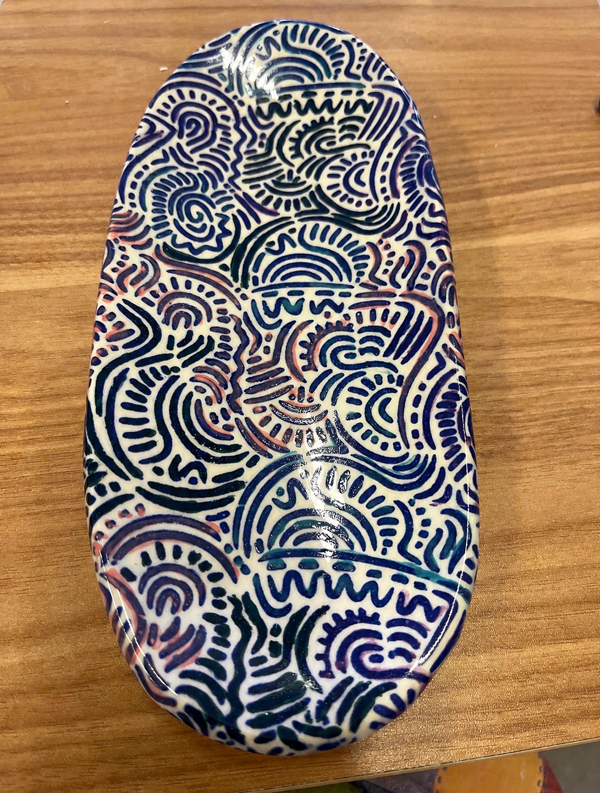
Click the images to enlarge them. Click the Esc key to close.